E-BIOM

E-BIOM aims to reveal the strategic power of biodiversity by placing it at the heart of territories and business models. By combining a consultancy firm with a laboratory, E-BIOM develops scientific expertise, tools and indicators that translate biodiversity into concrete levers for action, aligned with the regulatory and strategic needs of companies and public authorities.

imec vzw

Imec is the world’s leading independent nanoelectronics R&D hub. The combination of our talent, infrastructure, and partner network enables breakthroughs towards microchips that are smaller, faster, more affordable, and more sustainable. We combine that nanotech expertise with data and AI to create and support applications for a smarter, better future.

Effectief Geven

Effectief Geven is an independent advisory centre that helps organisations and individuals donate more effectively – achieving the highest scientifically proven impact per euro. Free and independent, we guide companies towards the most effective charities addressing climate and poverty, backed by Nobel Prize-winning research and 50,000 hours of analysis each year.

Effectief Geven logo

PlantC

Working with PlantC means taking action today in Belgium for biodiversity and the climate. We invite companies, public organisations and citizens to join us by choosing from our services: developing biodiversity strategies and action plans, strengthening ecological corridors through on-the-ground projects, providing project support, and offering education and training.

PlantC logo

Djapo

How can children and young people learn to deal with challenges such as social inequality and climate change? Djapo is a pedagogical and didactic expert, pioneer and partner in sustainable development. We collaborate with the education sector and all who engage with youth in social transition, helping them zoom in and out, reflect and dialogue to better grasp the world.

Djapo logo

VUB embraces inner growth

What if the green transition starts with leadership from within? The House of Sustainable Transitions connects personal growth and systemic change.

Igor Vervoort is a thought leader within the sustainability movement and coordinator of the House of Sustainable Transitions (HOST), a research platform at the Vrije Universiteit Brussel (VUB). The organisation brings together researchers to discuss sustainability issues, with a particular focus on the role of inner change in transition processes. Igor participated in The Inner Shift, our community of practice anchored in the Inner Development Goals (IDGs).

“You often hear about the Sustainable Development Goals or systems change. But it also takes inner work – and the IDGs provide a powerful framework to explore that.”

Where did your interest in The Inner Shift come from?

At our university, Professor Cathy Macharis – co-founder of HOST – had already introduced the Inner Development Goals in her sustainability courses. HOST has always started from a systemic perspective, and from there my interest in the inner dimension also grew. So I already knew a little about the IDGs, but had not really explored them in depth. When I saw The Inner Shift programme, it felt like the right time to dive in, experience, reflect and gain insights that could enrich our work at HOST. And the prospect of doing this with other committed members of The Shift made it all the more appealing.

Which IDG themes spoke to you the most?

The first session, around Being, was particularly powerful. It was about grounding yourself – who you are, how you are in the world. This is very relevant both personally and professionally. But the session on Collaborating also struck a chord with me. Collaborating is in the DNA of HOST. It was enriching not only to discuss the theory, but also to do exercises together that revealed the practical application that was there too.

Was there anything that surprised you along the way?

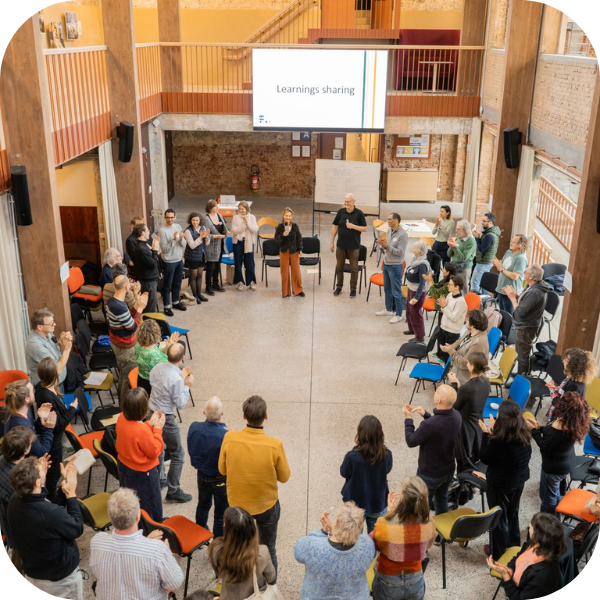
I was positively surprised by how much care went into the group counselling. Each session began with an opening moment, a short meditation or reflection. That alone was an application of the IDGs. It created space – and that space really made a difference.

What do you take away from this experience?

Honestly, the whole framework. Each of the five IDG dimensions – Being, Thinking, Relating, Collaborating, Acting – can contribute to how we work, grow and what we can do as an organisation. I see a lot of potential to make even more room for this within our research community at the VUB, especially for young researchers and students. It’s a valuable lens.

And I am also proud to say that in the time since, we have officially become an IDG Hub with HOST – now the IDG Brussels House of Sustainable Transitions Hub. Our goal is to put the IDG framework into practice. We have already started doing that through an IDG Lab on co-creation, connection and transformation, as well as a workshop on climate constellations for the sustainable transition. And that’s just the beginning – there are more activities and learning pathways to come.

More impact stories

At The System Shift, we believe that meaningful change starts from within, and grows through shared learning. Want to delve deeper into what makes you a resilient advocate for sustainability, within your organisation and beyond?

Overlay
building blocks

EPHEC

EPHEC is an engaged learning community where students, faculty and local and international partners work together to create innovative learning experiences that bring everyone’s potential to life, for life.

ephec logo

The Cornerstone

The Cornerstone focuses on social sustainability and impact, with a focus on the ‘S’ in ESG. We help organisations integrate social impact into their strategies through methods such as Theory of Change, Social Return on Investment and human rights assessments. In this way, we strengthen their social value and stimulate sustainable growth.

the circular hub logo

UHasselt

Hasselt University is a young and dynamic university with two campuses in Diepenbeek and Hasselt and seven research institutes. Under the motto “Knowledge in action”, it is working on an innovative and sustainable future for the region.

uhasselt logo

Société Royale Forestière de Belgique – Koninklijke Belgische Bosbouwmaatschappij

Since 1893, the Royal Belgian Forestry Society (RFSB) has been committed to the preservation and promotion of forests in all their diversity. It promotes high-quality sustainable forest management, provides training in forestry techniques and focuses on climate adaptation and biodiversity protection.

SFRB KBBM logo